
A USA work visa is an official document issued by the U.S. government that allows foreign nationals to enter the United States for the purpose of employment. Unlike an ESTA or a tourist visa, a work visa authorizes you to receive payment from a U.S. employer and engage in gainful employment – either temporarily or permanently.
This guide explains every major U.S. work visa category, who qualifies, what it costs, and how to apply in 2026.
Temporary (Nonimmigrant) Work Visas
Temporary work visas allow you to work in the United States for a specific period. Your employer typically files a petition with U.S. Citizenship and Immigration Services (USCIS) on your behalf before you can apply at a U.S. consulate abroad.
The most common temporary work visa categories are:
| Visa Category | Who It Is For | Maximum Stay |
|---|---|---|
| **H-1B** | Specialty occupation workers (IT, engineering, finance, healthcare) | 3 years (extendable to 6) |
| **H-2A** | Temporary or seasonal agricultural workers | Up to 1 year (renewable) |
| **H-2B** | Temporary non-agricultural workers (hospitality, landscaping, construction) | Up to 1 year (renewable) |
| **L-1A** | Intracompany transferees – executives and managers | Up to 7 years |
| **L-1B** | Intracompany transferees – specialized knowledge | Up to 5 years |
| **O-1** | Individuals with extraordinary ability in sciences, arts, business, athletics | Up to 3 years (renewable) |
| **E-1** | Treaty traders | 2 years (renewable indefinitely) |
| **E-2** | Treaty investors | 2 years (renewable indefinitely) |
| **TN** | NAFTA professionals from Canada and Mexico | 3 years (renewable) |
| **P-1** | Internationally recognized athletes and entertainers | Up to 5 years |
Each category has distinct eligibility criteria, filing procedures, and annual caps. The H-1B visa is by far the most sought-after, with over 400,000 applications filed each year.
Permanent (Employment-Based) Work Visas
If you want to live and work in the United States permanently, you need an employment-based immigrant visa (also called a green card through employment). Approximately 140,000 immigrant visas are available each fiscal year across five preference categories:
| Preference | Description | Labor Certification Required? |
|---|---|---|
| **EB-1** | Extraordinary ability, outstanding professors/researchers, multinational executives | No |
| **EB-2** | Advanced degree professionals or exceptional ability | Yes (unless national interest waiver) |
| **EB-3** | Professionals, skilled workers, other workers | Yes |
| **EB-4** | Special immigrants (religious workers, certain employees) | No |
| **EB-5** | Investors ($1,050,000 or $800,000 in targeted employment areas) | No |
The EB-1 category is the fastest path to a green card since it does not require employer sponsorship or labor certification. The EB-5 investor visa requires a substantial capital investment but has no language or education requirements.
The H-1B Visa: America’s Most Popular Work Visa
The H-1B visa deserves special attention because it is the primary route for skilled foreign professionals to work in the United States.
Who Qualifies for H-1B?
To qualify, you must:
- Have a bachelor’s degree or higher (or equivalent) in the specific specialty
- Be offered a position that requires at least a bachelor’s degree in a related field
- Have a U.S. employer willing to sponsor your petition
- Meet any state licensing requirements for the profession
Common H-1B occupations include software engineers, data scientists, financial analysts, architects, physicians, and university professors.
The H-1B Lottery and Cap
Congress sets an annual cap of 65,000 H-1B visas (plus an additional 20,000 for applicants with a U.S. master’s degree or higher). Because demand far exceeds supply, USCIS uses a random lottery to select eligible petitions. For fiscal year 2026, USCIS received approximately 470,000 registrations for 85,000 available spots.
H-1B Fees
| Fee | Amount | Who Pays |
|---|---|---|
| Registration fee | $215 | Employer |
| Base filing fee (I-129) | $780 | Employer |
| ACWIA training fee | $750 or $1,500 | Employer |
| Fraud prevention fee | $500 | Employer |
| Premium processing (optional) | $2,805 | Employer or employee |
| Public Law 114-113 fee (50+ employees, 50%+ H-1B) | $4,000 | Employer |
Total employer costs typically range from $2,000 to $10,000+ depending on company size and whether premium processing is requested.
H-1B Timeline
- March: Registration period opens
- March-April: Lottery conducted
- April 1: Earliest filing date for selected petitions
- October 1: Employment start date for the new fiscal year
How to Apply for a USA Work Visa: Step by Step
The application process varies by visa category, but generally follows these stages:
Step 1: Employer Files a Petition
Your U.S. employer files Form I-129 (Petition for a Nonimmigrant Worker) with USCIS. For H-1B, the employer first submits an electronic registration during the designated period.
Step 2: Labor Certification (if required)
For categories like H-1B, the employer must obtain a Labor Condition Application (LCA) from the Department of Labor, certifying that hiring you will not adversely affect U.S. workers’ wages.
Step 3: USCIS Processing
USCIS reviews the petition. Processing times vary from 2 to 6 months under regular processing, or 15 calendar days with premium processing ($2,805).
Step 4: Consular Interview
Once USCIS approves the petition, you apply for a visa at the U.S. embassy or consulate in your home country. You will need:
- Approved petition receipt (I-797)
- Valid passport
- DS-160 confirmation page
- Visa application fee payment ($190 for most work visas)
- Supporting documents (degree certificates, employment letter, financial evidence)
Step 5: Enter the United States
With an approved visa stamp, you may enter the U.S. up to 10 days before your employment start date. A Customs and Border Protection (CBP) officer will grant your admission at the port of entry.
Work Visa vs. ESTA or B-1 Business Visa
A common mistake is confusing work visas with business visas or the ESTA (Electronic System for Travel Authorization). These documents serve fundamentally different purposes:
| Feature | Work Visa (H-1B, L-1, etc.) | ESTA / B-1 Business Visa |
|---|---|---|
| Employment in the U.S. | **Yes** – authorized to work | **No** – cannot accept employment |
| Employer sponsorship | Required | Not required |
| Maximum stay | 1-7 years (varies) | 90 days (ESTA) / 6 months (B-1) |
| Attend meetings/conferences | Yes | Yes |
| Receive U.S. salary | Yes | No |
| Annual cap | Yes (H-1B) | No cap |
If you only need to attend a business meeting, negotiate a contract, or visit a conference, a B-1 business visa or ESTA may be sufficient. If you plan to work for a U.S. employer, you must obtain a proper work visa.
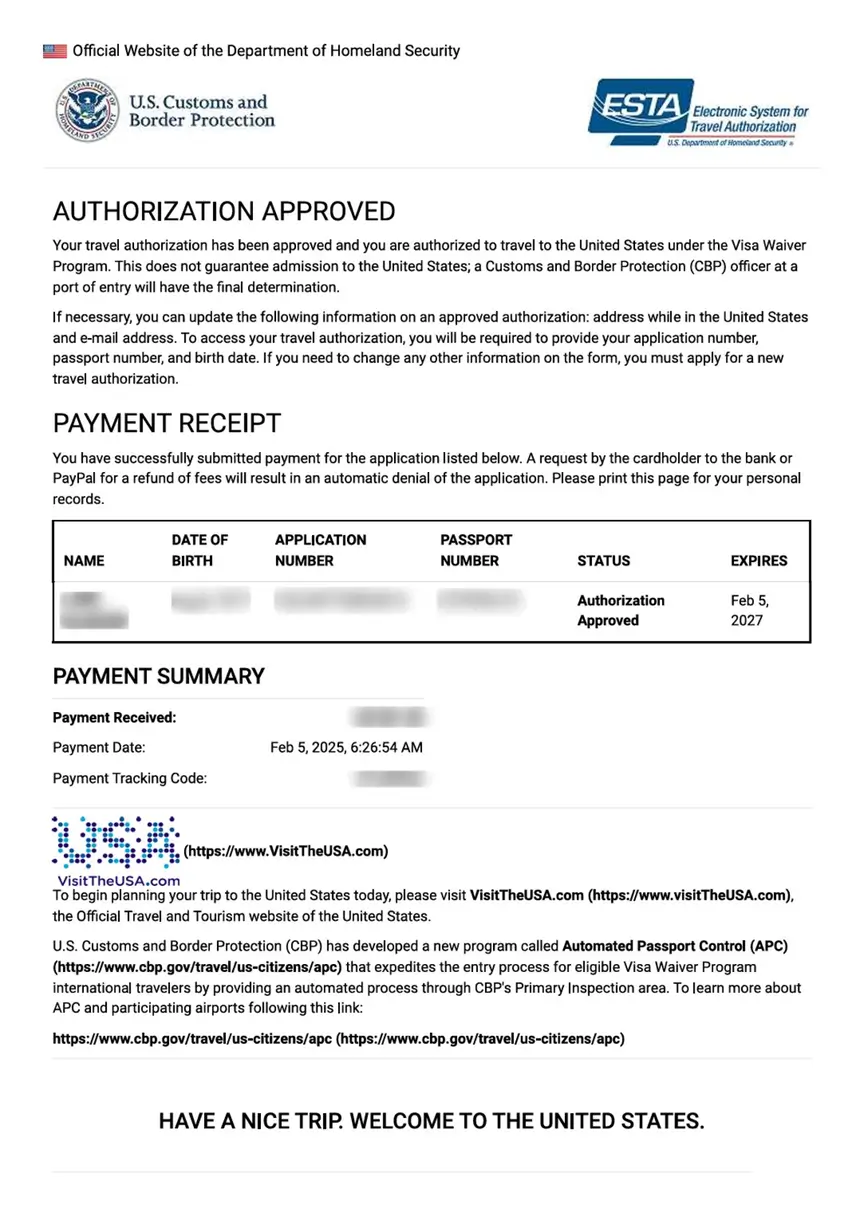
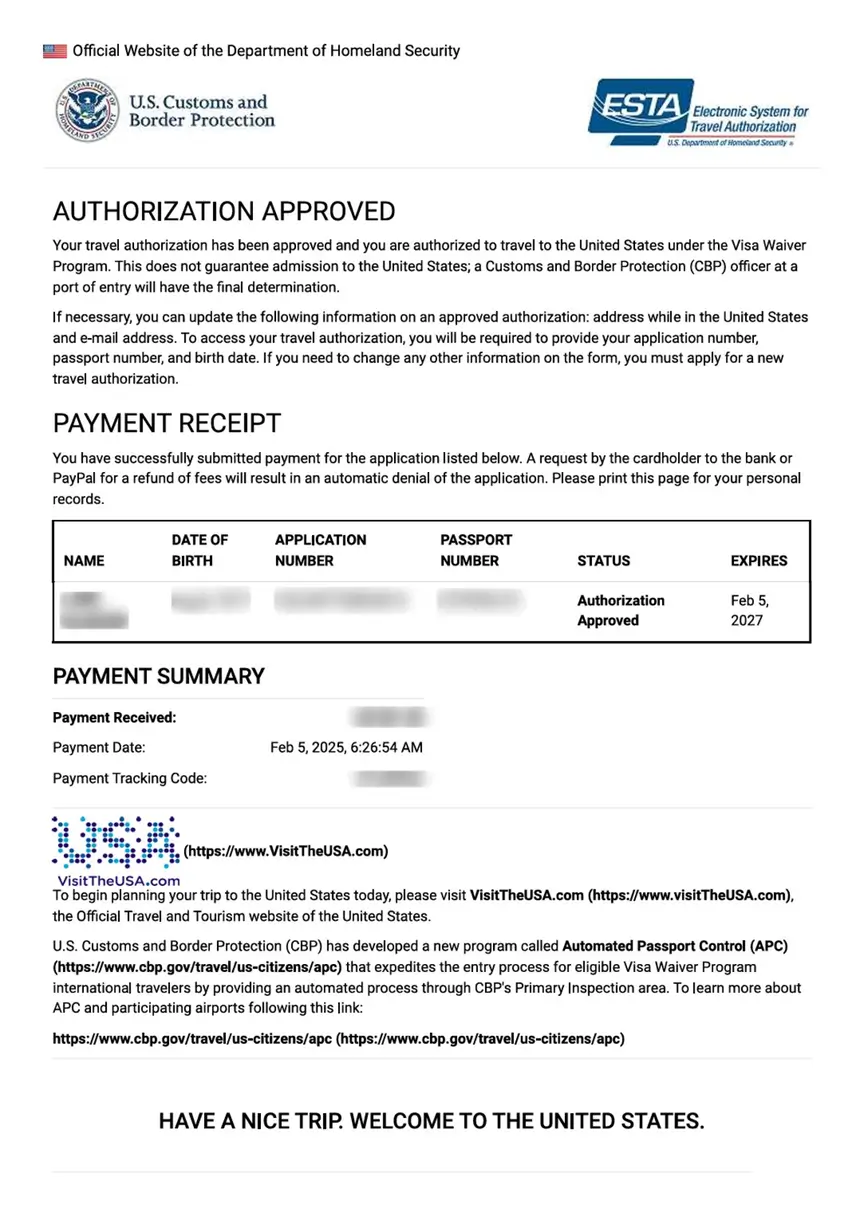
Before applying, make sure you meet the ESTA requirements if you are from a Visa Waiver Program country – you may be able to travel for short business visits without a visa at all. However, an ESTA does not authorize employment of any kind, even unpaid work for a U.S. organization.
Tips for a Successful Work Visa Application
- Start early. H-1B registration opens in March, and consular wait times can be several months.
- Ensure your employer files correctly. Errors in Form I-129 are the most common cause of delays and denials.
- Keep copies of everything. Maintain records of all filings, receipts, and correspondence with USCIS.
- Check your passport validity. Your passport must be valid for at least six months beyond your intended stay.
- Consult an immigration attorney. Work visa rules are complex, and a qualified attorney can help navigate category selection, documentation, and timing.
- Do not overstay. Violating your visa status can result in bars on future entry to the United States.
FAQs About USA Work Visas
Can I switch employers on an H-1B visa?
Yes. H-1B visa holders can change employers through a process called **H-1B portability**. Your new employer files a new I-129 petition, and you can begin working for them as soon as the petition is filed (you do not need to wait for approval).
Can my spouse work if I have a work visa?
It depends on your visa type. Spouses of **L-1** visa holders (L-2 status) are authorized to work incident to status. Spouses of **H-1B** holders (H-4 status) can apply for work authorization if the H-1B holder has an approved I-140 immigrant petition or has received H-1B extensions beyond six years.
What happens if my H-1B petition is not selected in the lottery?
If your petition is not selected, your employer can explore alternative options such as the **O-1** (extraordinary ability), **L-1** (intracompany transfer), **TN** (for Canadian or Mexican nationals), or consider filing in the next fiscal year’s lottery.
Do I need a job offer before applying for a work visa?
For most categories (H-1B, L-1, H-2A, H-2B), **yes** – a U.S. employer must offer you a position and file a petition on your behalf. Exceptions include the **EB-1A** (extraordinary ability, self-petition) and **EB-5** (investor visa).
How long does the entire work visa process take?
Timelines vary significantly. H-1B regular processing takes 2-6 months; premium processing is 15 calendar days. From initial registration to actually starting work in the U.S., the full H-1B process typically spans **6 to 12 months**. Employment-based green cards can take **1 to 10+ years** depending on the preference category and country of birth.