

Planning a trip to the United States? One of the most common questions travelers ask is: how long does it take to get a US visa? The answer depends on which type of travel authorization you need, your nationality, and where you apply.
This guide covers processing times for every major US visa category – from the near-instant ESTA approval to the multi-month wait for interview appointments at busy embassies.
ESTA Processing Time
For citizens of the 42 Visa Waiver Program (VWP) countries, the Electronic System for Travel Authorization (ESTA) is the fastest way to get permission to enter the United States.
How Fast Is ESTA Approval?
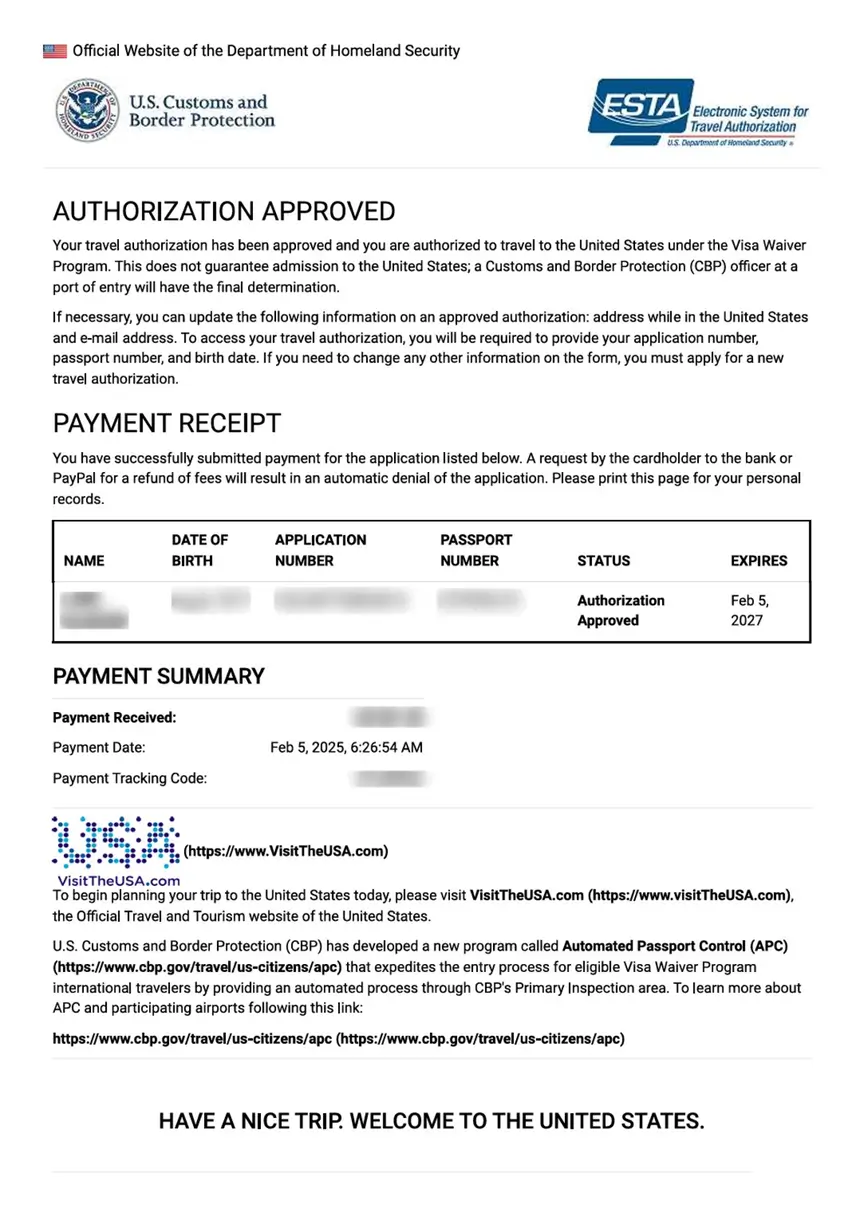
Most ESTA applications receive a response within seconds. The system is fully automated and processes applications 24/7. In the vast majority of cases, travelers receive an approval notification almost immediately after submitting their application.
However, CBP advises applicants to apply at least 72 hours before departure, because:
- Some applications require manual review and may take up to 72 hours
- A small percentage of applications are returned with a “Pending” status
- Applications can be denied, and you need time to apply for a regular visa instead
ESTA Processing Statuses
| Status | Meaning | Typical Timeframe |
|---|---|---|
| Authorization Approved | You’re cleared to travel | Seconds to minutes |
| Authorization Pending | Manual review required | Up to 72 hours |
| Travel Not Authorized | ESTA denied | Final – apply for visa instead |
When ESTA Takes Longer
Certain factors can trigger additional review:
- Previous visa denials or US immigration violations
- Dual nationality with certain countries
- Incomplete or inconsistent application data
- Name matches on security watchlists
If your ESTA is still pending after 72 hours, check the status on the official ESTA website. Do not submit duplicate applications – this can cause further delays. ESTA is valid for two years or until your passport expires, whichever comes first. Once approved, you do not need to reapply for each trip.
The ESTA fee is $40.27 ($21 processing fee + $19.27 authorization fee). For full details on costs, see our guide on USA ESTA fees.
B-1/B-2 Tourist Visa Processing Time
For travelers who are not eligible for ESTA – or who need to stay longer than 90 days – a B-1/B-2 tourist visa is required. The processing timeline is more complex and involves multiple stages.
Step-by-Step Timeline
Step 1: Complete the DS-160 Application (1-2 hours)
The DS-160 online form takes about one to two hours to complete. You’ll need your passport, travel itinerary, employment details, and information about your US contact. Once submitted, you receive a confirmation barcode needed for the interview.
Step 2: Pay the Application Fee ($185)
The non-refundable MRV application fee is $185 for B-1/B-2 visas. Additionally, as of 2026, a new Visa Integrity Fee of $250 applies to certain applicants. Payment is made through the embassy’s designated system and may take 1-2 business days to process. For the complete breakdown of all fees, see our USA Tourist Visa guide.
Step 3: Schedule and Attend the Interview (varies widely)
This is where processing times vary the most. Interview wait times depend on the embassy or consulate:
| Location | Typical Wait Time |
|---|---|
| London, UK | 7-14 days |
| Mexico City, Mexico | 30-60 days |
| New Delhi, India | 60-120 days |
| Lagos, Nigeria | 90-180 days |
| Bogotá, Colombia | 30-45 days |
| Manila, Philippines | 60-90 days |
Wait times are approximate and change frequently. Check the State Department wait times page for current estimates.
Step 4: Interview to Decision (3-15 business days)
After the interview, most applicants receive a decision within a few business days. However, some cases require additional administrative processing (called a Security Advisory Opinion), which can add several weeks to several months.
Step 5: Passport Delivery (3-5 business days)
Once approved, your passport with the visa stamp is returned via courier or available for pickup at the embassy.
Total B-1/B-2 Processing Time
| Scenario | Total Time |
|---|---|
| Best case (short wait, no issues) | 2-4 weeks |
| Average case | 4-8 weeks |
| With administrative processing | 2-6 months |
| High-demand embassy with backlogs | 3-6+ months |
The B-1 business visa and B-2 tourist visa follow the same processing timeline. Most embassies issue a combined B-1/B-2 visa.
Processing Times by Visa Type
Different US visa categories have different processing timelines. Here is what to expect for the most common visa types:
Student Visa (F-1)
F-1 student visas can be applied for up to 120 days before the program start date. Processing typically takes 2-8 weeks, including the SEVIS fee payment and interview scheduling. Students should apply as early as possible, especially during the summer rush when thousands of international students compete for interview slots.
Work Visa (H-1B, L-1, O-1)
The H-1B work visa process is the longest among common nonimmigrant visas:
- Registration period: March each year
- Lottery results: April
- Petition filing: April-June
- Regular processing: 2-6 months after filing
- Premium processing: 15 calendar days (additional $2,805 fee)
Total timeline from registration to approval: 6-10 months with regular processing. L-1 and O-1 visas are not subject to the lottery and can be filed year-round, with processing times of 2-4 months (regular) or 15 days (premium).
Exchange Visitor Visa (J-1)
J-1 visas typically process in 2-6 weeks after receiving the DS-2019 form from the program sponsor. Summer programs have longer wait times due to high volume.
Fiancé Visa (K-1)
The K-1 fiancé visa is one of the longest processes:
- USCIS petition processing: 6-12 months
- NVC processing: 4-6 weeks
- Embassy interview and decision: 2-4 months
- Total: 10-18 months
Visa Bulletin Wait (Immigrant Visas)
For family-sponsored and employment-based green cards, the Visa Bulletin controls when applicants can move forward. Wait times range from 1 year to 23+ years depending on category and country of chargeability. Applicants from India, China, Mexico, and the Philippines face the longest backlogs.
Factors That Affect Processing Time
Several factors can speed up or slow down your US visa processing:
Embassy Workload
Some embassies process thousands of applications weekly, while others handle far fewer. High-volume posts in India, Nigeria, and the Philippines often have longer wait times. Smaller embassies may have shorter queues but fewer available slots.
Security Checks
Applicants from certain countries, with certain travel histories, or in certain professions may trigger additional security screening. The Security Advisory Opinion (SAO) process can add weeks to months to processing. STEM researchers and applicants who have visited certain countries are more likely to be selected.
Peak Season
Summer (May-August) is the busiest season for US visa applications worldwide. If you plan to travel in summer, apply in January or February. Similarly, the December holiday season sees increased demand from family visitors.
Application Completeness
Missing documents, incorrect information, or unclear answers lead to delays or denials. Double-check everything before your interview. Common mistakes include incorrect passport numbers on the DS-160, missing financial evidence, and insufficient ties to the home country.
Country of Origin
Processing times vary significantly by nationality due to reciprocity agreements, security concerns, and embassy staffing levels. Some nationalities also face additional visa validity restrictions.
How to Check Your Visa Status
For ESTA
Visit the official ESTA website and enter your application number, passport number, and birth date. You can also retrieve an existing application or check its expiration date.
For Nonimmigrant Visas (B-1/B-2, F-1, H-1B, etc.)
Use the CEAC Status Check tool. Enter your case number to see the current status:
- No Status: Application received, awaiting processing
- Administrative Processing: Additional review required
- Issued: Visa approved and being printed
- Refused: Visa denied (may be overcome with additional documents)
For Immigrant Visas
Check processing times on the USCIS website for petition-based cases. Processing times are updated monthly and vary by form type and service center.
Expedited Processing Options
Premium Processing (H-1B, L-1, O-1, EB-1)
USCIS offers premium processing for certain employment-based petitions. For a fee of $2,805 (as of 2026), USCIS guarantees an initial response within 15 calendar days. This is available for H-1B, L-1, O-1, and certain EB-1 petitions.
Emergency Interview Appointments
Most embassies offer emergency appointment slots for:
- Medical emergencies
- Funeral attendance
- Urgent business travel
- Students with imminent program start dates
Request an expedited appointment through the embassy’s online scheduling system. You will need to provide documentation supporting the urgency.
USCIS Expedite Criteria
USCIS may expedite cases that meet specific criteria:
- Severe financial loss to a company or individual
- Humanitarian emergency
- Nonprofit organization request
- US government interest
- USCIS processing error
Expedite requests must be submitted with supporting evidence and are granted at USCIS discretion.
Tips to Avoid Delays
-
Apply early. Start at least 3 months before your planned travel date. For ESTA, apply at least 72 hours before departure – though applying weeks ahead is even safer.
-
Complete forms accurately. Errors on the DS-160 or other forms cause delays. Review everything twice before submitting. Pay special attention to passport numbers, dates of birth, and travel history.
-
Gather all documents. Bring your passport, DS-160 confirmation, appointment letter, photo, financial evidence, and ties to your home country. Incomplete documentation is the most common reason for visa delays.
-
Check embassy-specific requirements. Each embassy may require additional documents. Visit the embassy website before your interview to see the specific checklist for your location.
-
Monitor your status. Check CEAC status regularly after your interview. Respond promptly to any requests for additional documents – delays in responding restart the processing clock.
-
Don’t book non-refundable tickets. Until your visa is approved, avoid committing to travel arrangements you can’t change. Many airlines offer flexible booking options for this reason.
-
Know your ESTA requirements. If you’re from a VWP country, make sure you meet all ESTA requirements before applying. Having a denied ESTA on record can complicate future visa applications.
Frequently Asked Questions
How long does ESTA approval take?
Most ESTA applications are approved within seconds. CBP recommends applying at least 72 hours before travel, as some applications require manual review and may take up to 72 hours.
How long does a B-1/B-2 visa take?
The entire process typically takes 2-8 weeks, but can extend to several months depending on embassy wait times and whether additional security checks are required.
Can I speed up my visa processing?
For employment visas, premium processing is available for an additional fee. For tourist visas, expedited appointments may be available for emergencies. There is no way to pay for faster ESTA processing.
Why is my visa taking so long?
Common reasons include administrative processing (security checks), high embassy volume, incomplete applications, or peak season demand.
How long is a US visa valid?
B-1/B-2 visas are typically valid for 10 years (multiple entry), but this varies by nationality. ESTA is valid for 2 years or until your passport expires, whichever comes first.
What if my visa is denied?
You can reapply with additional supporting documents. There is no waiting period for B-1/B-2 reapplications, but you must pay the application fee again. If your ESTA is denied, you must apply for a regular visa at an embassy.
Is there a difference in processing time between B-1 and B-2?
No. B-1 (business) and B-2 (tourism) visas follow the same processing timeline. Many embassies issue a combined B-1/B-2 visa.
Does the Visa Integrity Fee affect processing time?
The $250 Visa Integrity Fee (introduced in 2026) does not affect processing time. It is a separate fee collected at the time of visa issuance.
Last updated: July 2026. Processing times are subject to change. Always check official sources for the most current information.